


How to Produce Better Event Signage: Expert Advice on Materials, Inks, and Printing Methods
BY GABBY HOUCK
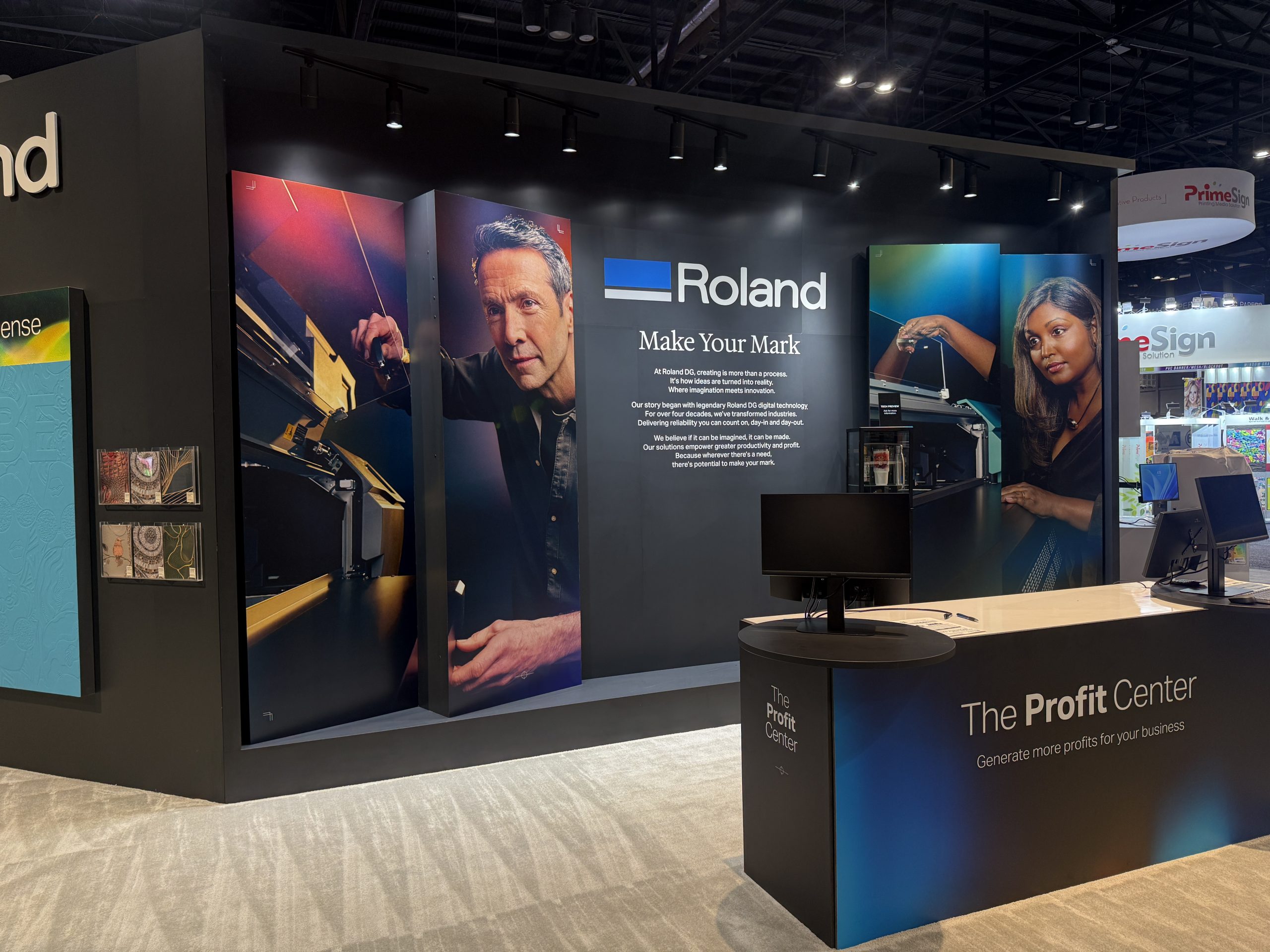
Eye-catching promotional signage promoting Roland's "Profit Center." | Credit: Roland DGA
Creating impactful event signage requires more than vibrant graphics. Discover expert insights on materials, inks, file setup, and production strategies that help banners, displays, and posters stand out.
If tradeshows like PRINTING United Expo, FESPA, or ISA have proven anything as of late – it’s that events are back in a big way. And to make up for lost time, it seems the booths are getting more extravagant, bold, and innovative.
So what printing methods, tips, and tools can you utilize to make sure you’re producing the best event signage possible? We talked to experts from Orbus and Roland DGA to get you a 101 guide for banners, displays, posters and more.
Consider The Product’s Purpose
Bryan Ballreich, graphics production manager for Roland DGA, says one of the most common mistakes he sees when it comes to producing event signage is not considering purpose and longevity of the product.
“You need to know if the banners will be hung for a few hours and then tossed, whether they will be up for several days, or even if they will be rolled up and carried to the next event. Gauging the client’s need for durability will help you choose which printer, inks, and media to use,” Ballreich says. “If the banners will be displayed for only a few hours, you can choose to produce them in a less expensive and more environmentally friendly way, using, for example, paper or fibrous paper media on an eco-solvent printer.”
Conversely, if the banners are going to be more long-term, Ballreich explains that you’ll need to provide additional durability because event banners are typically run on less expensive materials like scrim banner media — however, within that media category are a range of media gauges, quality levels, and costs.
Jaime Herand, senior vice president of operations, U.S. Exhibits at Orbus Visual Communications, also agrees that understanding how durable you need your signage to be is a major factor — and you need to consider what type of environment you’re going to have the signage in.
“Durability challenges typically come down to mismatched materials and finishing. Outdoor banners require weather-appropriate substrates and reinforced finishing elements like hems and grommets to perform over time,” Herand says.
“When you understand the purpose of the banner, you can review your available materials and assess the needed quality, white point (meaning the specific color characteristics, tone and brightness of the media), and stability to ensure the appropriate durability and color consistency, and then choose the appropriate printing technology,” Ballreich says.
Printing for Indoor vs Outdoor
Say the event you’re making signage for is outdoors; the process for printing outdoors versus indoors is going to look very different.
“Indoor graphics focus on high-quality, vibrant color output, while outdoor applications must account for additional factors like environmental resistance,” Herand says.
Ballreich echoes a similar sentiment, saying the biggest threat to indoor graphics is tactile damage while the biggest threat to outdoor graphics is the environment itself.
“Outdoor event graphics production mandates a more expensive process to protect from wind, rain, and sun. In most cases, it’s best to use an eco-solvent printer with a very durable laminate. UV inks can also be a good option, although there are some constraints on using a laminate with UV inks,” Ballreich says.
He continues, “For indoor graphics, you have a wider choice of production methods since you don’t have to worry as much about sun damage to the graphics. Printing indoor graphics allows you to choose options that minimize costs. You can use UV, eco-solvent, water-based or latex inks, and choose from a variety of media. Your finishing options are based on the type of installation you are doing; however, you will likely not need to laminate your graphics.”
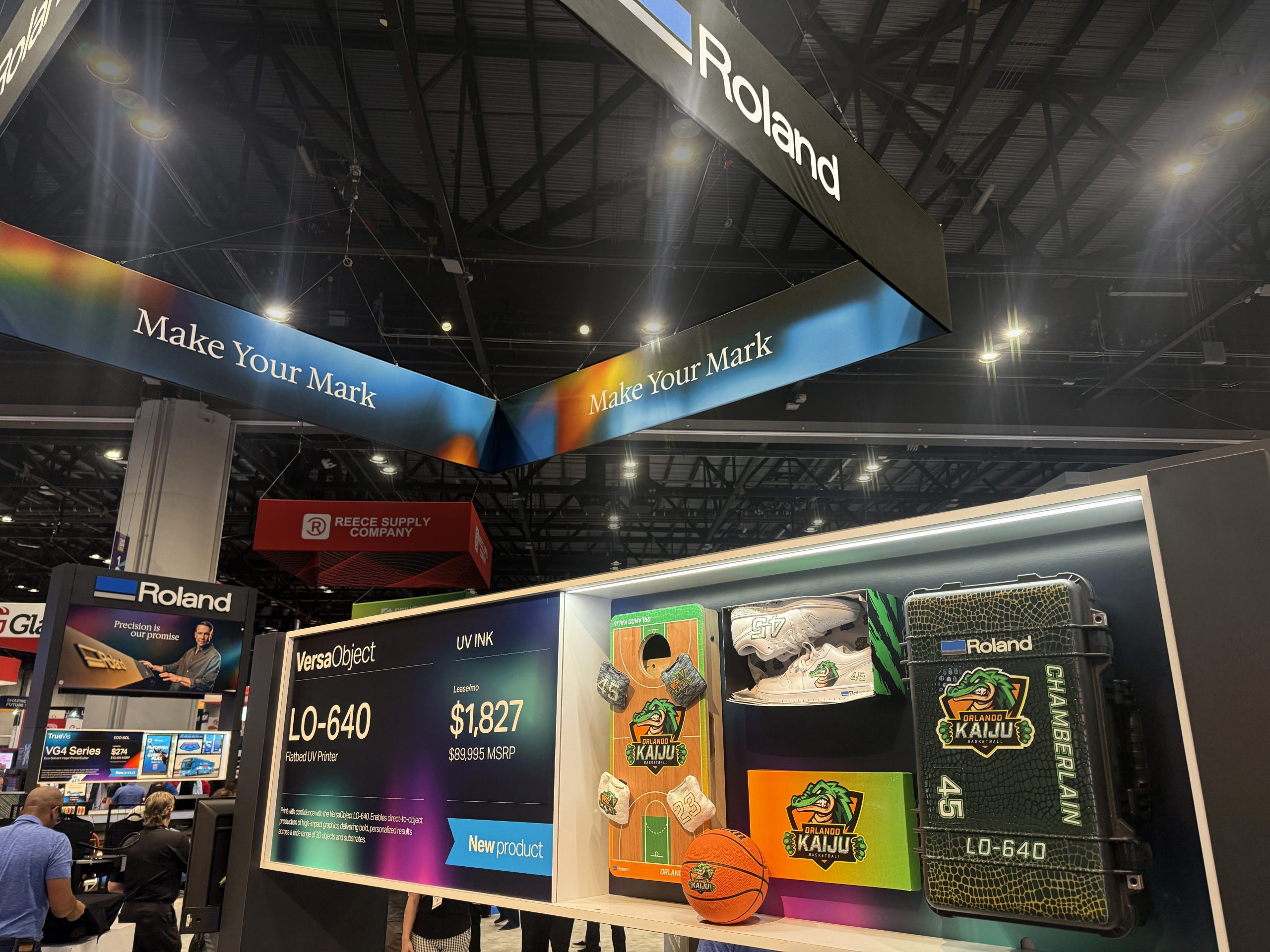
At trade shows, companies often employ a variety of signage types and styles to showcase who they are and what they offer, from hanging signage to custom backdrops. | Credit: Roland DGA
It Starts with File Setup
While Ballreich believes the biggest mistake is not having a full understanding of the graphics’ purpose, Herand believes one of the biggest mistakes happens at the very beginning of the production process.
“One of the most common issues starts at the file setup stage; incorrect color modes, low-resolution imagery, or missing bleed can all lead to inconsistent output. Establishing strong artwork standards upfront is critical to avoiding rework,” Herand says.
If you are trying to create backdrops or large-scale versions of photos or art, Ballreich says Roland’s rule of thumb is 75 dpi at a 1-to-1 scale.
“I prefer a little higher resolution if possible. It’s also important to ask what the viewing distance will be so that you can make sure the graphic can be viewed clearly at that distance,” Ballreich says.
Herand agrees, saying that viewing distance must be taken into consideration — at Orbus, they recommend designing at final size with resolution in the 100–120 dpi range.
It also boils down to the right color settings.
“For high quality, photographic reproduction jobs, the color settings must be calculated and managed,” Ballreich says. “You need to run these jobs on higher quality settings to eliminate banding. With the newest printing technology, you can print in faster modes and get results that mimic slower, higher quality printing.”
Choosing Your Substrate
Speaking of color management and print settings — the substrate you eventually decide on will impact those two things directly.
“There’s a large variety of substrates available, from flexible vinyl the thickness of four human hairs on up to plywood boards and other thick, rigid substrates. Each of these substrates vary in durability, white point, thickness, rigidity, and, of course, cost,” Ballreich says. “My advice is that if you haven’t worked with a particular substrate before, run tests before going into full production.”
As for print settings, Ballreich explains that after you’ve managed to correctly feed the material on the printer you are using, then you need to assess things like the material’s surface quality. He says fabrics can be “especially tricky depending on their weave and whether or not they are mounted to a paper backing.”
Despite the fabric’s ability to be tricky, Herand says she still sees high demand for dye-sublimated fabrics.
“Dye-sublimated fabrics continue to be a popular choice for trade show and event graphics, Herand says. “Their ability to fold for reduced shipping costs, combined with the option to clean and reuse graphics when needed, makes fabric an easy and versatile solution.”
For Ballreich, he’s seeing high demand for air-release vinyl media with “channeling built into the adhesive layer that allows for dry- mounting and repositioning during the mounting process.”
What About Rigid Signage?
Even though dye-sublimated graphics are continuing to dominate in the trade show and event space, what if you want to think outside the box with rigid signage? Stuff like PVC and acrylic? Well, now you can thanks to UV-ink technology.
“The latest UV printing technologies and ink sets have excellent bonding characteristics with most brands of foam board and PVC. There are a lot of materials that are purpose-made for certain applications, and we’ve had excellent print results on most types of foam board and PVC,” Ballreich says.
He explains that acrylic still poses a challenge because not all acrylic products come with prepared surfaces that UV ink bonds well to without any preparation. For example, gloss acrylic that mimics glass is a more difficult substrate to bond to, but Ballreich says primers or adhesion promoters can be wiped or sprayed on. However, be careful because those products can haze the surface.
“We continue to test adhesion promoters and are trying to develop an ink chemistry that gives us that ink bond regardless of surface. In the meantime, with certain types of acrylic, you’ll need to use an adhesion promoter or propose using UV-DTF printing as an alternative if the client is open to that type of process,” Ballreich says.
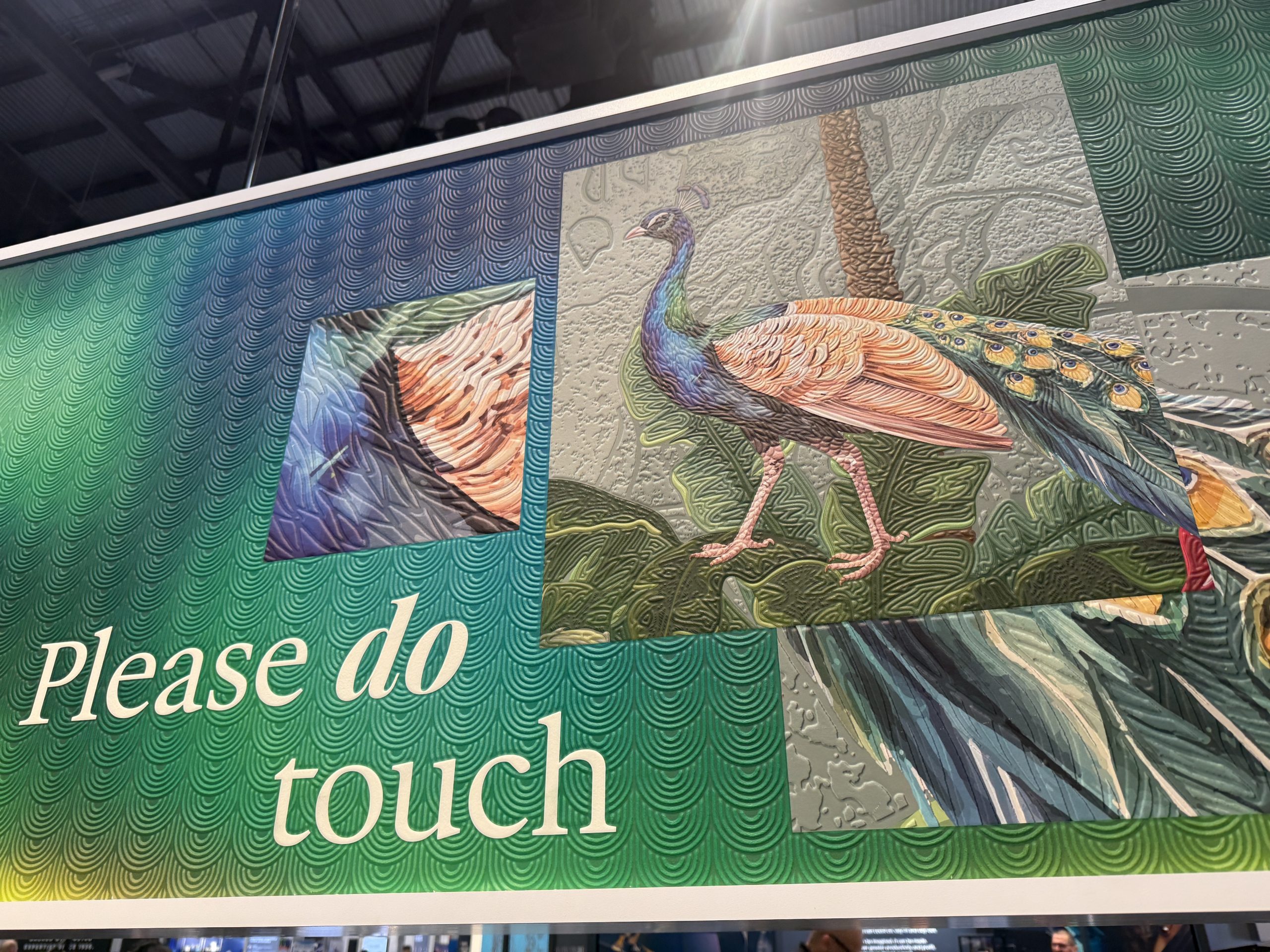
This wall utilizes the help of different textures and colors to draw people in. | Credit: Roland DGA
Choosing the Right Ink
So far, you’ve seen some terms getting thrown about; eco-solvent, UV, etc. So, how do you determine which ink technology is right for your graphics?
Danial Valade, senior product manager for Roland DGA, weighs in on this with a helpful guide.
Indoor Signage (retail graphics, wall murals, POP displays, posters)
Best fit: Eco-solvent ink
Good for:
- Vinyl decals
- Posters
- Window graphics
- Wall graphics
- Retail promotional signage
Why choose it:
- Lower equipment cost than many UV systems
- Strong adhesion to vinyl-based media
- Good outdoor durability for short-to-medium-term use
- Vibrant color
Outdoor Long-Term Signage (yard signs, real estate boards, fleet graphics, outdoor banners)
Best fit: UV-curable ink
Good for:
- Coroplast signs
- Acrylic
- Aluminum composite panels
- PVC boards
- Outdoor directional signs
Why choose it:
- Excellent weather resistance
- Prints directly to rigid substrates
- Instant curing = faster turnaround
- Better scratch resistance than many solvent systems
- Instant curing = faster turnaround
- Better scratch resistance than many solvent systems
“Keep in mind that some UV inks can become brittle on flexible applications like vehicle wraps, and UV inks can have adhesion challenges on certain specialty substrates,” Valade says.
Maximizing Visual Impact is Easier than Ever
Ballreich says that thanks to the latest advancements in printing, inks are sparking a new era in the industry.
“We’re in a period of dramatic change in the industry. There is growing availability of ink types, printing technologies, and even machine sizes for sign producers to choose from,” Ballreich says.
And because of the fact that ink types are only getting better and better, they have made images more vibrant, and it has become the star attraction in trade show settings.
“At Roland DGA, we keep improving our ink sets by expanding them with new colors like orange, red, and green inks. These advances mean that colors that weren’t possible several years ago are now very much in range for production,” Ballreich says. “These new inks combined with materials with bright white points provide a much broader spectrum of color into areas nearing iridescence.
Between expanded color gamuts, flourishing UV-ink technology, and a demand for graphics that will stop someone in their tracks, it seems signage producers are being set up for success.

